NCBI Summary
Natural killer (NK) cells are lymphocytes that can mediate lysis of certain tumor cells and virus-infected cells without previous activation. They can also regulate specific humoral and cell-mediated immunity. NK cells preferentially express several calcium-dependent (C-type) lectins, which have been implicated in the regulation of NK cell function. The group, designated KLRC (NKG2) are expressed primarily in natural killer (NK) cells and encodes a family of transmembrane proteins characterized by a type II membrane orientation (extracellular C terminus) and the presence of a C-type lectin domain. The KLRC (NKG2) gene family is located within the NK complex, a region that contains several C-type lectin genes preferentially expressed on NK cells. KLRC2 alternative splice variants have been described but their full-length nature has not been determined. [provided by RefSeq, Jul 2008].
Protein
Protein (NP_002251)
Killer cell lectin-like receptor C member 2
NKG2-C type II integral membrane protein (CD159 antigen-like family member C) (NK cell receptor C) (NKG2-C-activating NK receptor) (CD antigen CD159c)
KLRC2
killer cell lectin like receptor C2
Very low evidence
C-type lectin
Undefined
C-type - Natural Killer NK
a/b mixed / C-type lectin-like
MNKQRGTFSEVSLAQDPKRQQRKPKGNKSSISGTEQEIFQVELNLQNPSLNHQGIDKIYDCQGLLPPPEKLTAEVLGIICIVLMATVLKTIVLIPFLEQNNFSPNTRTQKARHCGHCPEEWITYSNSCYYIGKERRTWEESLLACTSKNSSLLSIDNEEEMKFLASILPSSWIGVFRNSSHHPWVTINGLAFKHKIKDSDNAELNCAVLQVNRLKSAQCGSSMIYHCKHKL
Mol* PDB structure viewer
Either no PDB or existing PDB of non-glycosylated form
Structural models
SWISS-MODEL structural models
The location of the lectin domain structural model is: 107-229
We infer [1.56, 2.02] Å as the interval of error of this structural model.
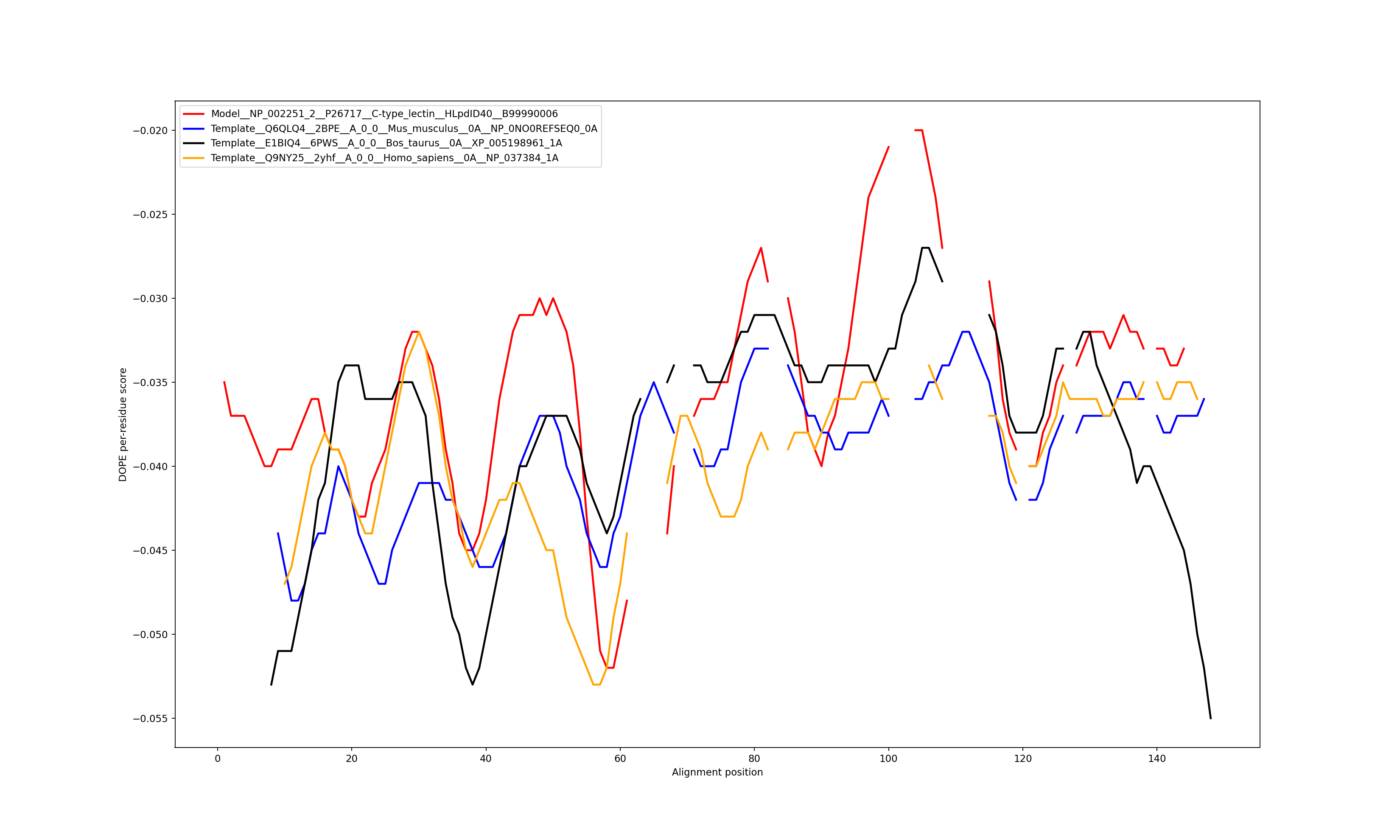
Template 1: 2BPE chain: A, Q6QLQ4, NP_0NO0REFSEQ0.0, sequence identity: 27.6%, coverage: 93.5%, location in sequence: 117-244, (117-244 in PDB).
Template 2: 6PWS chain: A, E1BIQ4, XP_005198961.1, sequence identity: 27.6%, coverage: 94.3%, location in sequence: 174-302, (162-290 in PDB).
Template 3: 2YHF chain: A, Q9NY25, NP_037384.1, sequence identity: 25.2%, coverage: 91.9%, location in sequence: 70-187, (70-187 in PDB).
Show the alignment used for the construction of the structural model, Download.
Show the plot of DOPE energy score, Download.
We infer [1.56, 2.02] Å as the interval of error of this structural model.
Template 1: 2BPE chain: A, Q6QLQ4, NP_0NO0REFSEQ0.0, sequence identity: 27.6%, coverage: 93.5%, location in sequence: 117-244, (117-244 in PDB).
Template 2: 6PWS chain: A, E1BIQ4, XP_005198961.1, sequence identity: 27.6%, coverage: 94.3%, location in sequence: 174-302, (162-290 in PDB).
Template 3: 2YHF chain: A, Q9NY25, NP_037384.1, sequence identity: 25.2%, coverage: 91.9%, location in sequence: 70-187, (70-187 in PDB).
Show the alignment used for the construction of the structural model, Download.
Show the plot of DOPE energy score, Download.
Oligomerization and Known Interactions
Heterodimer with KLRD1; disulfide-linked. KLRD1-KLRC2 receptor complex interacts with TYROBP homodimer; this interaction is necessary for the expression on the cell surface (PubMed:20890284, PubMed:9655483). KLRD1-KLRC2 receptor complex can bind with low affinity to HLA-E loaded with self-peptides derived from the signal sequence of classical MHC class Ia (PubMed:18083576, PubMed:9486650)
Annotation
Ligand
Glycan ligands from structural data
No crystal structures of complexes with glycan ligand.
References
NCBI References (10 PubMed Identifiers)
- Influence of NKG2C Genotypes on HIV Susceptibility and Viral Load Set Point. [34076484]
- Deletion of the NKG2C receptor encoding KLRC2 gene and HLA-E variants are risk factors for severe COVID-19. [33500568]
- Surface NKG2C Identifies Differentiated alphabetaT-Cell Clones Expanded in Peripheral Blood. [33664730]
- Adaptive NKG2C+ natural killer cells are related to exacerbations and nutritional abnormalities in COPD patients. [32131843]
- Phenotypic and Functional Analysis of Human NK Cell Subpopulations According to the Expression of FcepsilonRIgamma and NKG2C. [31867015]
- Sequence analysis of a 62-kb region overlapping the human KLRC cluster of genes. [9598306]
- HLA-E binds to natural killer cell receptors CD94/NKG2A, B and C. [9486650]
- Natural killer cell cytolytic activity is inhibited by NKG2-A and activated by NKG2-C. [9103421]
- A multigene family on human chromosome 12 encodes natural killer-cell lectins. [8436421]
- DNA sequence analysis of NKG2, a family of related cDNA clones encoding type II integral membrane proteins on human natural killer cells. [2007850]
UniProt Main References (12 PubMed Identifiers)
- The genomic organization of NKG2C, E, F, and D receptor genes in the human natural killer gene complex. [9683661]
- Conservation and variation in human and common chimpanzee CD94 and NKG2 genes. [11751968]
- The finished DNA sequence of human chromosome 12. [16541075]
- The status, quality, and expansion of the NIH full-length cDNA project: the Mammalian Gene Collection (MGC). [15489334]
- HLA-E-bound peptides influence recognition by inhibitory and triggering CD94/NKG2 receptors: preferential response to an HLA-G-derived nonamer. [9754572]
- Association of DAP12 with activating CD94/NKG2C NK cell receptors. [9655483]
- The CD94/NKG2C killer lectin-like receptor constitutes an alternative activation pathway for a subset of CD8+ T cells. [15940674]
- The heterodimeric assembly of the CD94-NKG2 receptor family and implications for human leukocyte antigen-E recognition. [18083576]
- NKG2A inhibits NKG2C effector functions of gammadelta T cells: implications in health and disease. [20952657]
- Expansion of a unique CD57+NKG2Chi natural killer cell subset during acute human cytomegalovirus infection. [21825173] Show more
RNA
RNA (Transcript ID: NM_002260.4)
m7G-5')ppp(5'-CCCUCACAUCACACAGCUGCAGAGAUGAAUAAACAAAGAGGAACCUUCUCAGAAGUGAGUCUGGCCCAGGACCCAAAGCGGCAGCAAAGGAAACCUAAAGGCAAUAAAAGCUCCAUUUCAGGAACCGAACAGGAAAUAUUCCAAGUAGAAUUAAAUCUUCAAAAUCCUUCCCUGAAUCAUCAAGGGAUUGAUAAAAUAUAUGACUGCCAAGGUUUACUGCCACCUCCAGAGAAGCUCACUGCCGAGGUCCUAGGAAUCAUUUGCAUUGUCCUGAUGGCCACUGUGUUAAAAACAAUAGUUCUUAUUCCUUUCCUGGAGCAGAACAAUUUUUCCCCGAAUACAAGAACGCAGAAAGCACGUCAUUGUGGCCAUUGUCCUGAGGAGUGGAUUACAUAUUCCAACAGUUGUUAUUACAUUGGUAAGGAAAGAAGAACUUGGGAAGAGAGUUUGCUGGCCUGUACUUCGAAGAACUCCAGUCUGCUUUCUAUAGAUAAUGAAGAAGAAAUGAAAUUUCUGGCCAGCAUUUUACCUUCCUCAUGGAUUGGUGUGUUUCGUAACAGCAGUCAUCAUCCAUGGGUGACAAUAAAUGGUUUGGCUUUCAAACAUAAGAUAAAAGACUCAGAUAAUGCUGAACUUAACUGUGCAGUGCUACAAGUAAAUCGACUUAAAUCAGCCCAGUGUGGAUCUUCAAUGAUAUAUCAUUGUAAGCAUAAGCUUUAGAAGUAAAGCAUUUGCGUUUGCAGUGCAUCAGAUACAUUUUAUAUUUCUUAAAAUAGAAAUAUUAUGAUUGCAUAAAUCUGAAAAUGAAUUAUGUUAUUUGCUCUGAUACAAAAAUUCUAAAUCAAUUAUUGAAAUAGGAUGCACACAAUUACUAAAGUACAGACAUCCUAGCAUUUGUGUCGGGCUCAUUUUGCUCAACAUGGUAUUUGUGGUUUUCAGCCUUUCUAAAAGUUGCAUGUUAUGUGAGUCAGCUUAUAGGAAGUACCAAGAACAGUCAAACCCAUGGAGACAGAAAGUAGAAUAGUGGUUGCCAAUGUCUCAGGGAGGUUGAAAUAGGAGAUGACCACUAAUUGAUAGAACGUUUCUUUGUGUCGUGAUGAAAACUUUCUAAAUUUCAGUAGUGGUGAUGGUUGUAACUCUGCGAAUAUACUAAACAUCAUUGAUUUUUAAUCAUUUUAAGUGCAUGAAAUGUAUGCUUUGUACAUGACACUUCAAUAAAGCUAUCCAGAAAAAAAAAA-3'- Poly-A tail - Coding region
DNA
DNA (Gene ID: 3822)
killer cell lectin like receptor C2
strand -
NKG2-C, CD159c, NKG2C
NCBI CDS gene sequence (696 bp)
5'-ATGAATAAACAAAGAGGAACCTTCTCAGAAGTGAGTCTGGCCCAGGACCCAAAGCGGCAGCAAAGGAAACCTAAAGGCAATAAAAGCTCCATTTCAGGAACCGAACAGGAAATATTCCAAGTAGAATTAAATCTTCAAAATCCTTCCCTGAATCATCAAGGGATTGATAAAATATATGACTGCCAAGGTTTACTGCCACCTCCAGAGAAGCTCACTGCCGAGGTCCTAGGAATCATTTGCATTGTCCTGATGGCCACTGTGTTAAAAACAATAGTTCTTATTCCTTTCCTGGAGCAGAACAATTTTTCCCCGAATACAAGAACGCAGAAAGCACGTCATTGTGGCCATTGTCCTGAGGAGTGGATTACATATTCCAACAGTTGTTATTACATTGGTAAGGAAAGAAGAACTTGGGAAGAGAGTTTGCTGGCCTGTACTTCGAAGAACTCCAGTCTGCTTTCTATAGATAATGAAGAAGAAATGAAATTTCTGGCCAGCATTTTACCTTCCTCATGGATTGGTGTGTTTCGTAACAGCAGTCATCATCCATGGGTGACAATAAATGGTTTGGCTTTCAAACATAAGATAAAAGACTCAGATAATGCTGAACTTAACTGTGCAGTGCTACAAGTAAATCGACTTAAATCAGCCCAGTGTGGATCTTCAATGATATATCATTGTAAGCATAAGCTTTAG-3'
By using this site you agree to our privacy policy.
Please confirm you agree with the privacy policy before using the site.
 How to cite